Quick answer
Choose a short veil for city hall or second looks, fingertip for the most flexibility, chapel for a softer ceremony train, and cathedral for the most formal aisle and portrait effect.
If you are unsure, start with the part of the wedding you care about most: ceremony entrance, portraits, dress detail, or reception movement. The right length is the one that supports that moment.
Start with the role of the veil
The best wedding veil length depends on what job the veil needs to do. Some veils complete the ceremony silhouette. Some soften the face in portraits. Some make a city hall look feel bridal. Some exist mostly for a second look or reception moment.
Before choosing length, decide whether your veil should add drama, frame the face, show off the dress, or stay easy to wear. That answer will narrow the choice faster than starting with trend photos.
Common veil lengths at a glance
Short veils usually fall from shoulder to elbow length or sit above the waist, depending on the style. They are best for city hall, reception, rehearsal, and second-look outfits.
Fingertip veils usually fall around the bride's fingertips. Chapel veils lightly trail behind the gown. Cathedral veils extend well beyond the train and create the most formal silhouette.
Exact measurements vary by designer, so use these as practical categories rather than fixed rules.
Short veils
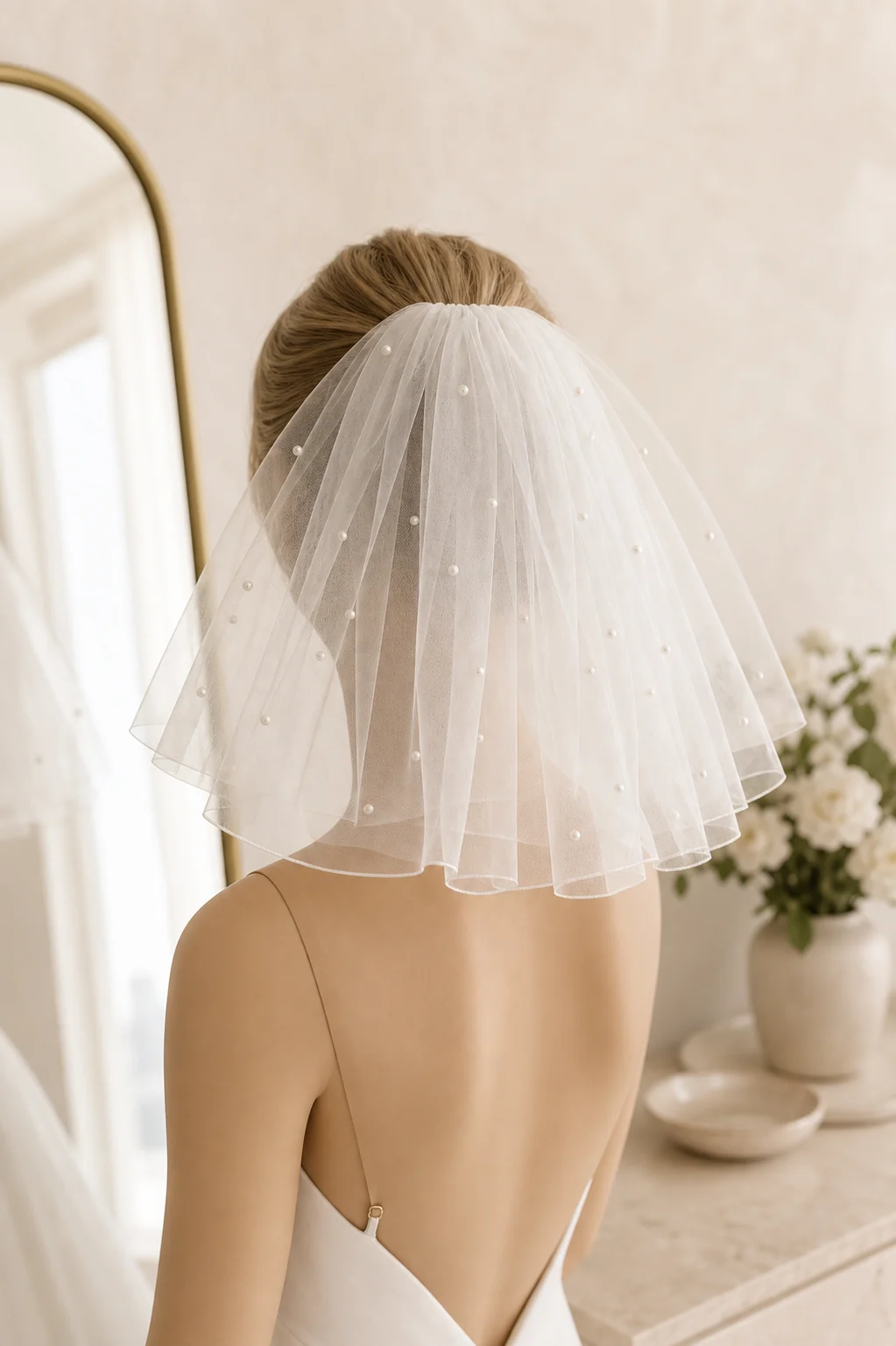
Short veils work for city hall weddings, courthouse looks, rehearsal dinners, reception outfits, and brides who want a veil moment without a formal train. They are also useful when the dress itself is short, tailored, or playful.
A short veil can feel modern and expressive, but it needs intention. It should look like a styling choice, not like a ceremony veil that stopped too early. Pearl, puff, satin-edge, or sculptural details can help the shorter proportion feel deliberate.
Fingertip veils
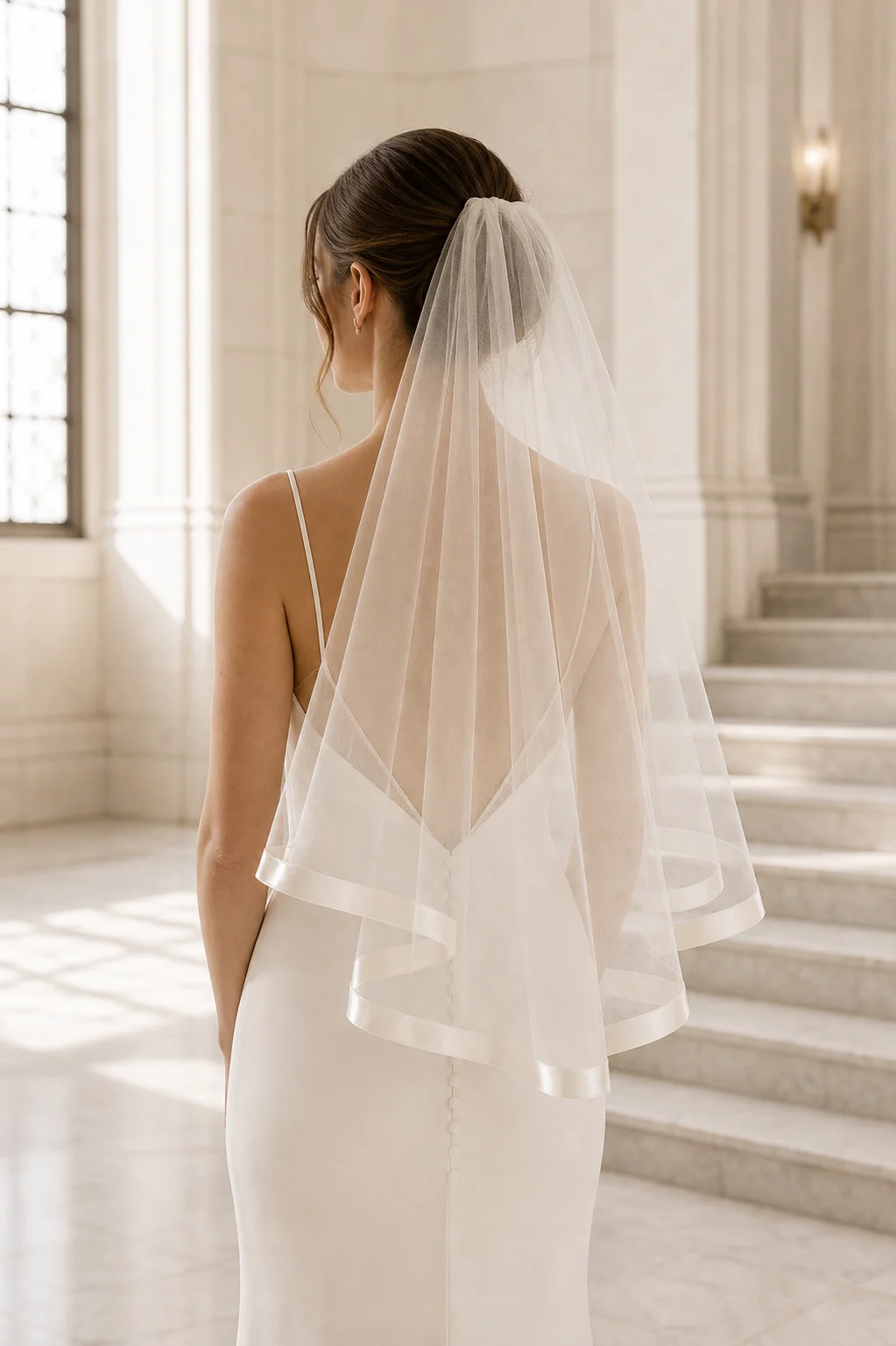
A fingertip veil usually falls around the bride's fingertips. It is one of the most flexible lengths because it gives softness and movement without extending far behind the dress.
Choose fingertip if you want the gown's back, train, buttons, bow, or lace placement to stay visible. It is also a practical choice for smaller venues, outdoor weddings, and brides who do not want help arranging fabric throughout portraits.
Chapel veils
A chapel veil adds more length than fingertip but less scale than cathedral. It can be a strong middle ground for brides who want a formal ceremony feel without a long trailing veil.
Chapel length works well when the dress has a modest train or when the venue feels elevated but not grand. It gives a little more sweep in photos while staying easier to manage than cathedral.
Cathedral veils
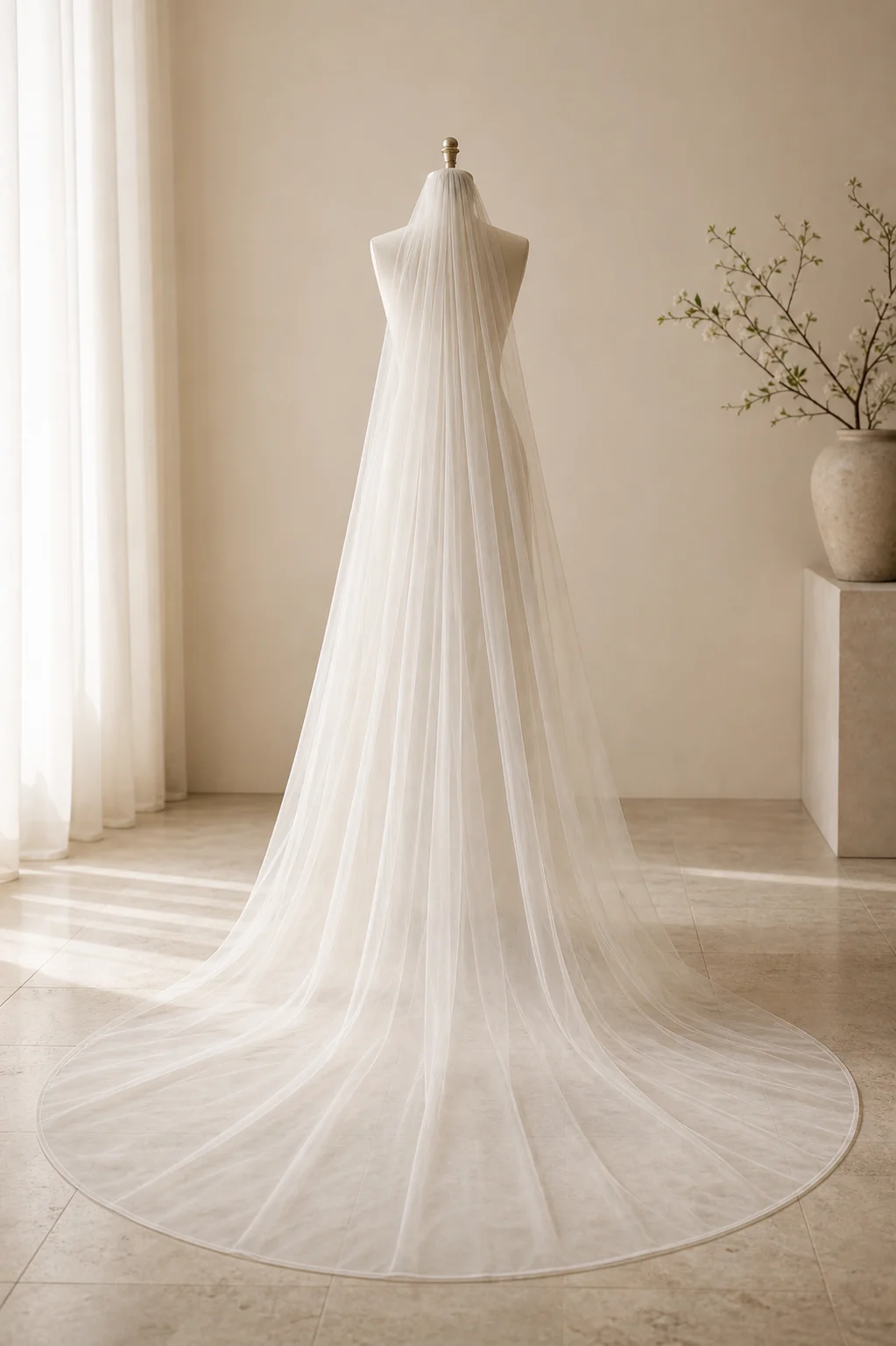
Cathedral veils create the most formal aisle and portrait effect. They extend beyond the dress and can transform a simple gown into a complete ceremony look.
Choose cathedral if your venue, dress train, and photography plan can support scale. It is especially strong with clean satin, crepe, mikado, strapless gowns, fitted gowns with trains, and minimalist dresses that need one dramatic element.
Match veil length to the dress train
A veil does not always need to match the train exactly, but the two should feel related. If the gown has no train, a very long veil becomes the main source of drama. If the gown has a long detailed train, a simpler veil often looks cleaner.
If the veil and train are both highly embellished, the eye may not know where to land. When in doubt, let one element lead and the other support.
Consider the ceremony setting
Venue scale matters. A cathedral veil can look natural in a church, estate, ballroom, museum, or garden with a long aisle. In a courthouse, restaurant, rooftop, or intimate room, a mid-length or short veil may feel more proportional.
Outdoor settings add another layer. Wind, grass, stairs, gravel, and humidity can all change how easy a long veil feels. If the photos are worth the management, cathedral can still be right. If ease matters more, go shorter.
Think about hair and attachment
Veil length affects how secure the attachment needs to be. A longer veil has more fabric and more pull, especially outdoors. Low buns, secure combs, and clear placement decisions matter more with cathedral length.
Short and fingertip veils give more flexibility. They can sit under a bun, above a bun, or at the crown depending on whether you want softness around the face or more visibility at the back.
Plan for photography
If your photographer plans wide ceremony portraits, aisle photos, staircase shots, or editorial veil movement, a longer veil gives them more to work with. If your priority is close portraits, table moments, and reception movement, a shorter veil may support the day better.
The right veil length should serve the photos you actually want, not the photos that look impressive on someone else's venue.
Our recommendation
If you want a ceremony veil that works with the widest range of formal dresses, start with a simple cathedral veil. If you want something softer and more detailed, pearl or lace can add texture without changing the overall length.
For city hall, rehearsal, or reception styling, a mid-length or short veil will usually feel more intentional than forcing a full ceremony veil into a smaller moment.
FAQ: What veil length is most versatile?
Fingertip is usually the most versatile because it works with many dress types and venues. Cathedral is more dramatic, while short veils are more specific to city hall, reception, and second-look styling.
FAQ: Can I wear a cathedral veil with a simple dress?
Yes. A simple dress often pairs beautifully with a cathedral veil because the veil supplies the ceremony drama while the gown stays clean.
FAQ: Should I choose veil length before the dress is altered?
Ideally, choose the veil direction before final styling appointments so you can evaluate the full silhouette, hair placement, and train length together.