Quick answer
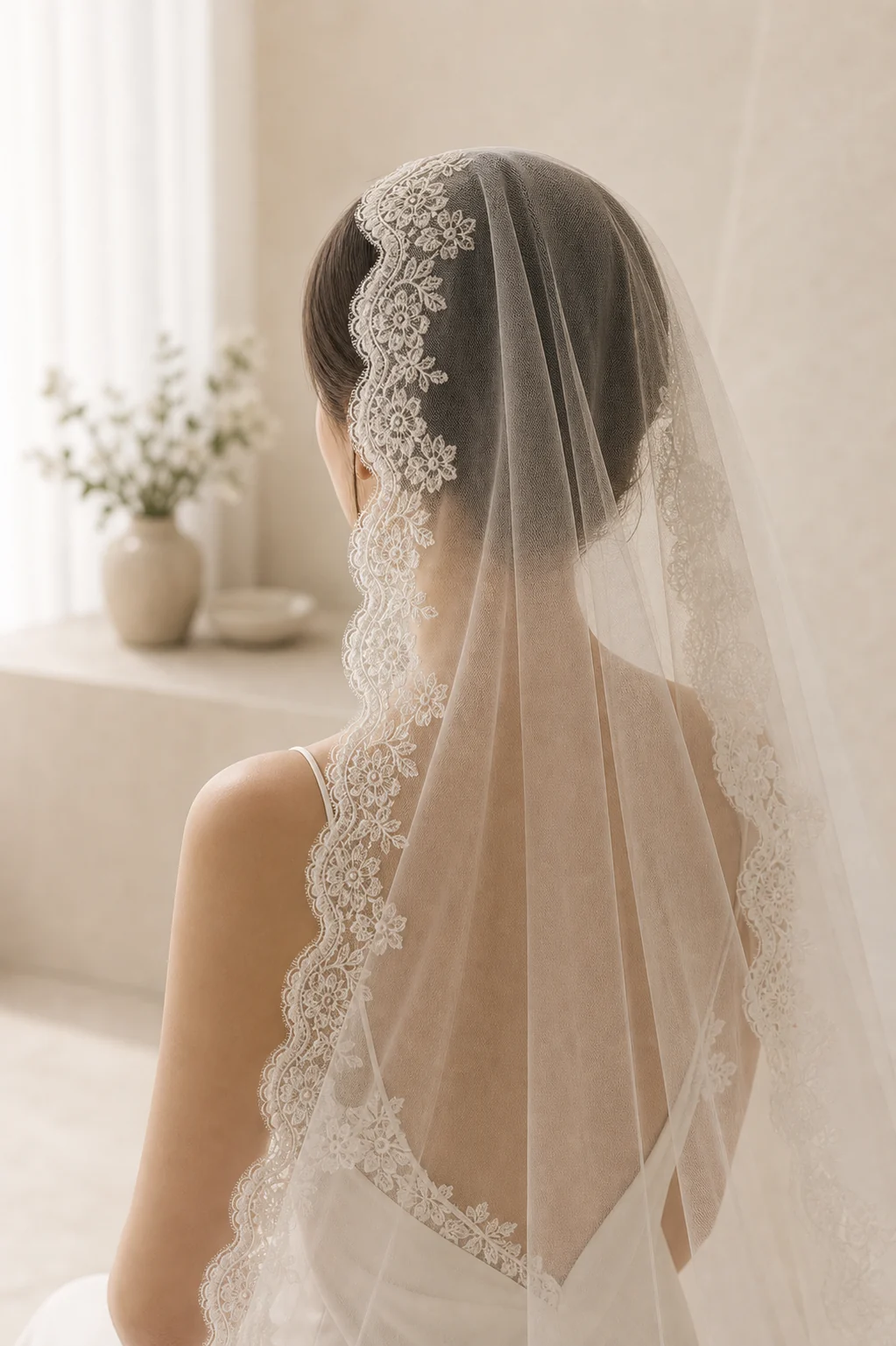
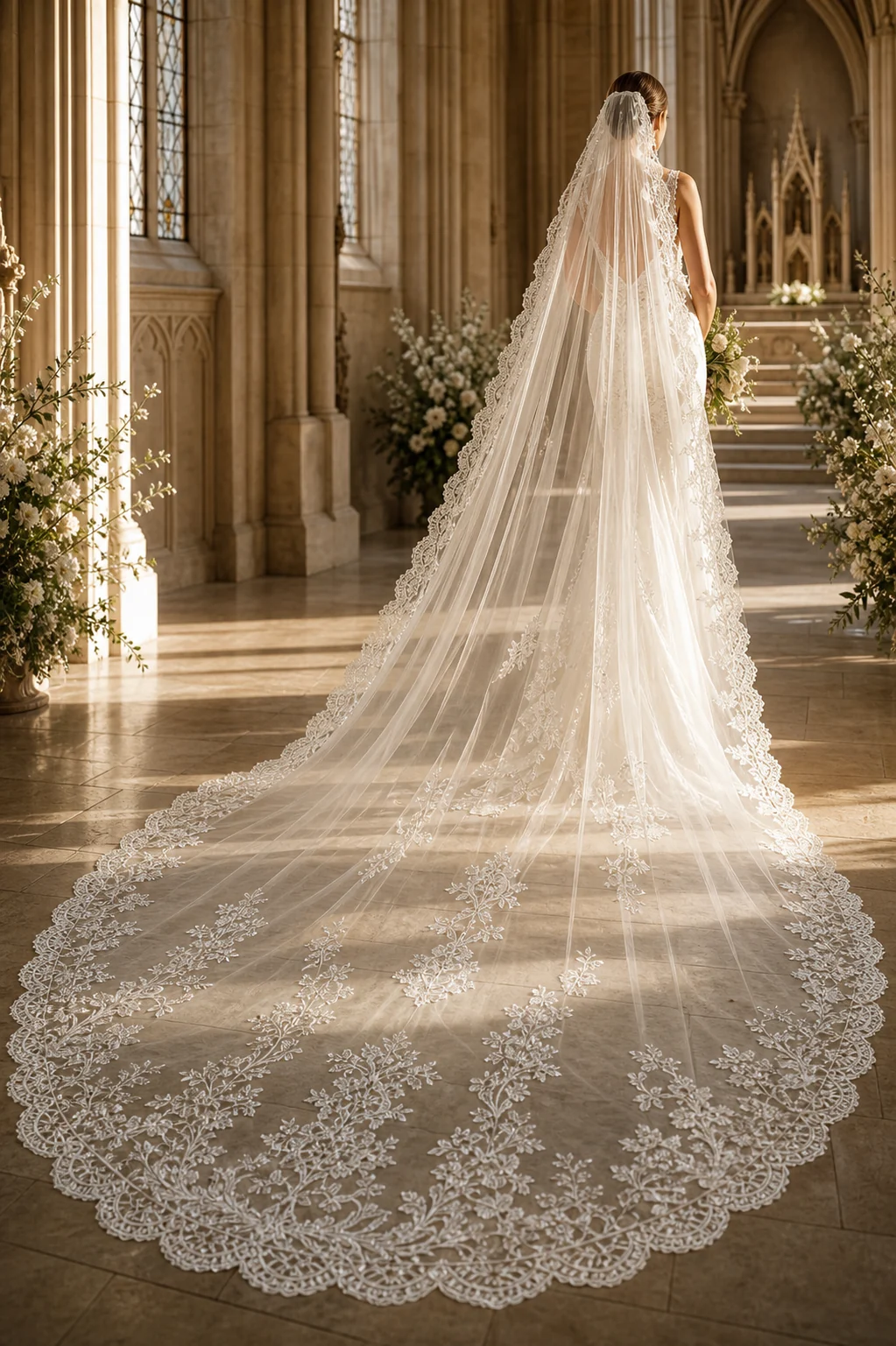
Choose a lace mantilla veil if you want the lace to frame your face and shoulders. Choose a lace cathedral veil if you want the lace to create a longer, more formal train moment.
Both can be romantic, but they solve different styling problems.
The main visual difference
A mantilla veil is about the frame. The lace edge is meant to be visible around the face, neckline, and shoulders, which makes placement and hair styling especially important.
A lace cathedral veil is about scale. The lace detail usually supports the long silhouette, dress train, and formal ceremony setting.
Which dress works with each style
Mantilla veils work well with clean satin, high necklines, bateau necklines, strapless gowns, and dresses where the face-framing lace can become the main accessory.
Lace cathedral veils work well with clean gowns that can carry lace at the train, or romantic gowns where the lace pattern does not fight the dress.
Hair and accessory considerations
A mantilla veil often needs more deliberate placement near the crown or slightly forward so the lace can frame the face. Jewelry should usually stay restrained.
A lace cathedral veil gives more flexibility at the crown or bun because the main impact is often behind the bride.
FAQ: Which one feels more traditional?
Mantilla veils often read more traditional because of the face-framing lace. Lace cathedral veils can feel traditional or editorial depending on the lace scale and gown pairing.
FAQ: Which one is easier to style?
A lace cathedral veil is usually easier because it does not depend as heavily on exact face-framing placement. A mantilla veil can be beautiful, but placement matters more.