Quick answer
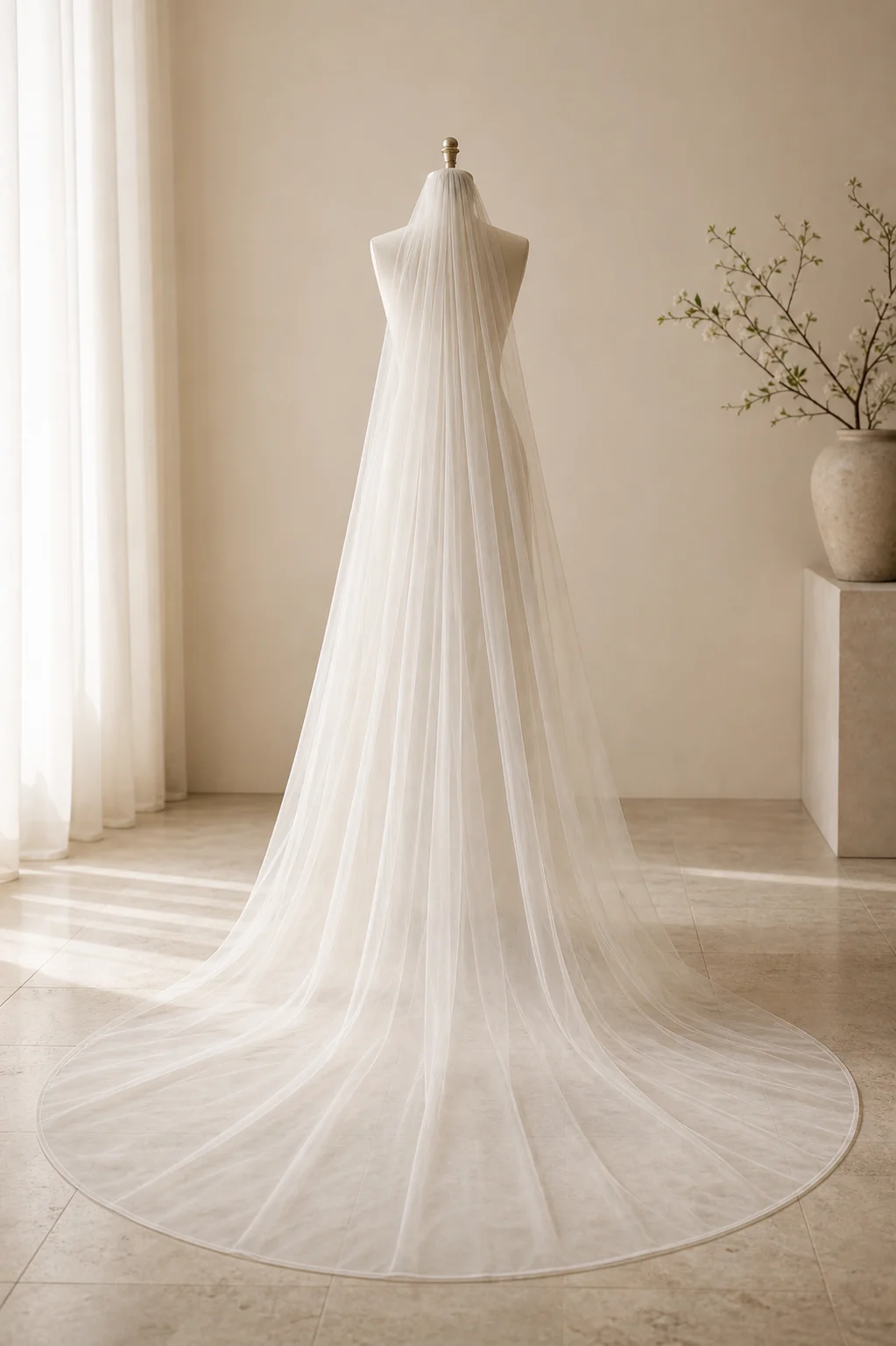
A plain cathedral veil is often one of the best choices for a simple wedding dress because it adds ceremony scale without adding visual noise.
If your gown is clean, structured, or minimalist, a plain cathedral veil can make the full look feel more bridal while keeping the dress as the main focus.
Why simple dresses work with cathedral veils
Simple dresses usually rely on proportion, fabric, neckline, and fit instead of heavy embellishment. A cathedral veil supports that language because it adds length and movement without introducing a competing motif.
The result can feel more expensive than adding a very ornate veil. The eye reads one clear idea: clean dress, long veil, strong ceremony silhouette.
Best dress fabrics and silhouettes
Plain cathedral veils are especially strong with satin, crepe, mikado, faille, and other smooth fabrics. They also work with column gowns, strapless gowns, square necklines, basque waists, and fitted dresses with restrained trains.
If the gown already has lace sleeves, beading, or dramatic back detail, a plain veil may still be useful because it gives length without covering the dress in another layer of decoration.
When to choose pearl or lace instead
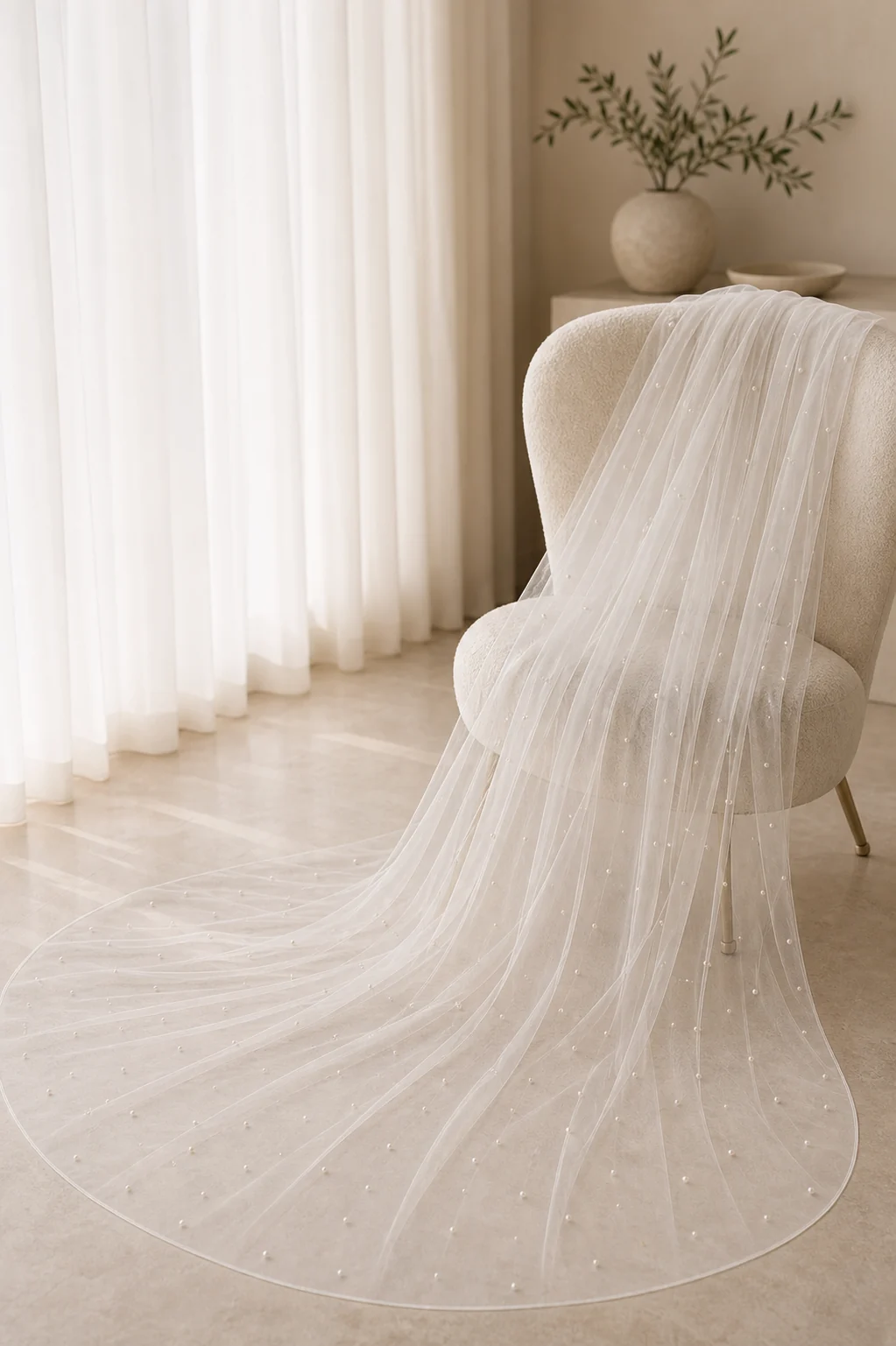
Choose pearl if the dress is clean but you want a little texture in close portraits. Choose lace if the dress is simple enough to carry a more romantic or traditional veil detail.
If you are unsure, plain is the most flexible starting point. It is easier to style across venues, hairstyles, and jewelry choices.
FAQ: Is a plain cathedral veil too understated?
Not usually. Cathedral length already creates drama. A plain finish simply keeps that drama focused on shape and movement instead of surface detail.
FAQ: Does a plain veil need a train on the dress?
No. A plain cathedral veil can supply the train effect when the dress itself is shorter or cleaner. The final choice depends on venue scale and photography goals.